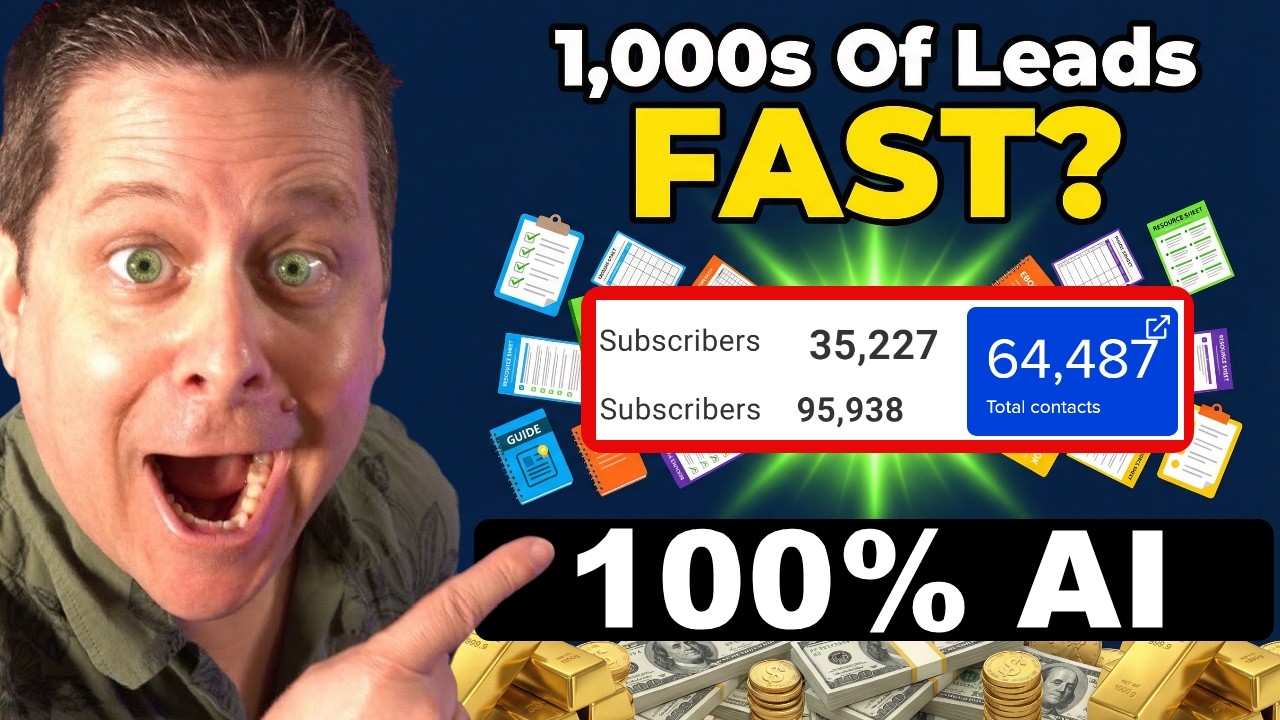
https://www.youtube.com/watch?v=2AQcFeCTVo4 Summary: Mastering Email List Growth Through Micro Funnels in 2026
Email list growth sounds like one of those phrases marketers whisper with dramatic lighting, like they’re in a prestige TV drama about landing pages. But this video from affiliatemarketingmc makes the idea refreshingly practical. Instead of building one huge lead magnet and praying the internet notices, the creator explains that you can build many small, highly specific offers that each attract a narrow slice of your audience.
That’s the core of the micro funnel strategy. And honestly? It makes a lot of sense. As demonstrated in the video, if one broad offer is one fishing line, then dozens or hundreds of tiny offers are a whole fleet. You’re not hoping everyone wants the same thing. You’re meeting people exactly where they are.
This article expands on the video How I Built a Massive Email List Using Micro Funnels! with timestamps, examples, SEO strategies, affiliate marketing context, and practical next steps you can use in 2026. You’ll also find resources mentioned or implied in the video, including ChatGPT and ClickBank, plus added guidance on conversion rates, Google Analytics, content distribution, webinars, online courses, and CRM setup.
TL;DR / Key Takeaways
If you only have two minutes and a rapidly cooling coffee, here’s the short version. The video’s big idea is that email list growth gets easier when you stop betting everything on one broad lead magnet and start creating many micro offers for different search intents and buyer types.
- Micro funnels work because they match intent. A person searching for a “zero-based budgeting checklist” is often easier to convert than someone vaguely browsing “save money tips.”
- AI shortens the setup time. Around 5:30, the creator shows how tools like ChatGPT can help brainstorm lead magnets, sub-niches, and landing page ideas much faster than doing everything manually.
- Niche selection matters more than clever design. At 3:10, the creator stresses choosing a market with proven demand, strong affiliate offers, and audiences that actually buy.
- Traffic should come from multiple places. The video points to Google, Facebook, blogs, and video traffic. In practice, you can add YouTube Shorts, Pinterest, influencer partnerships, webinars, and paid advertising once organic traction appears.
- Monetization needs to come first, not last. A lead magnet without a sales path is just an expensive hobby. Start with the product, affiliate network, or digital offer you’ll eventually promote.
According to affiliatemarketingmc, most beginners fail because they build one “perfect” funnel and wait. That’s like buying one lottery ticket and calling it a retirement plan. A smarter move is testing many small entry points, watching conversion rates, and scaling the offers that pull in qualified subscribers.
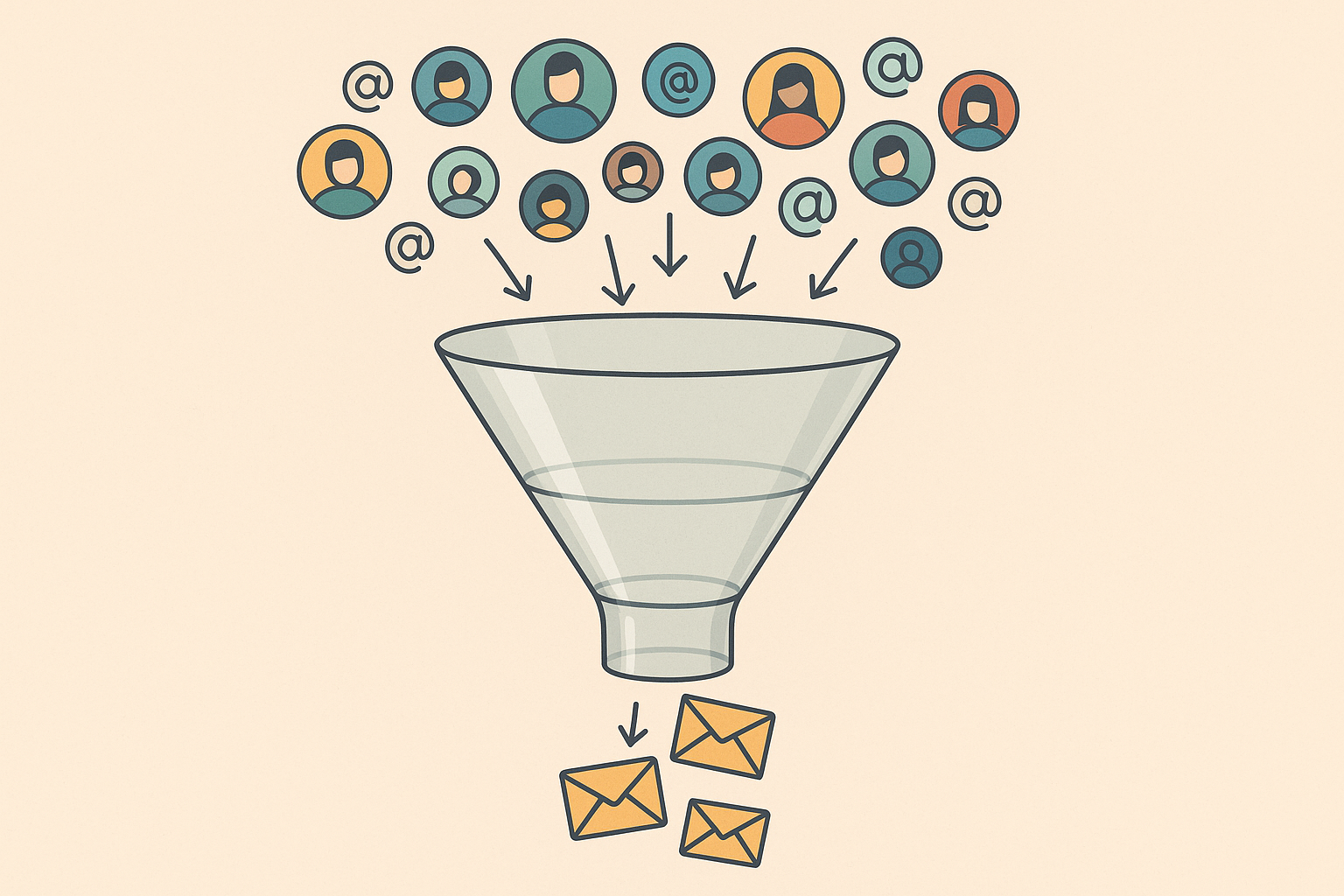
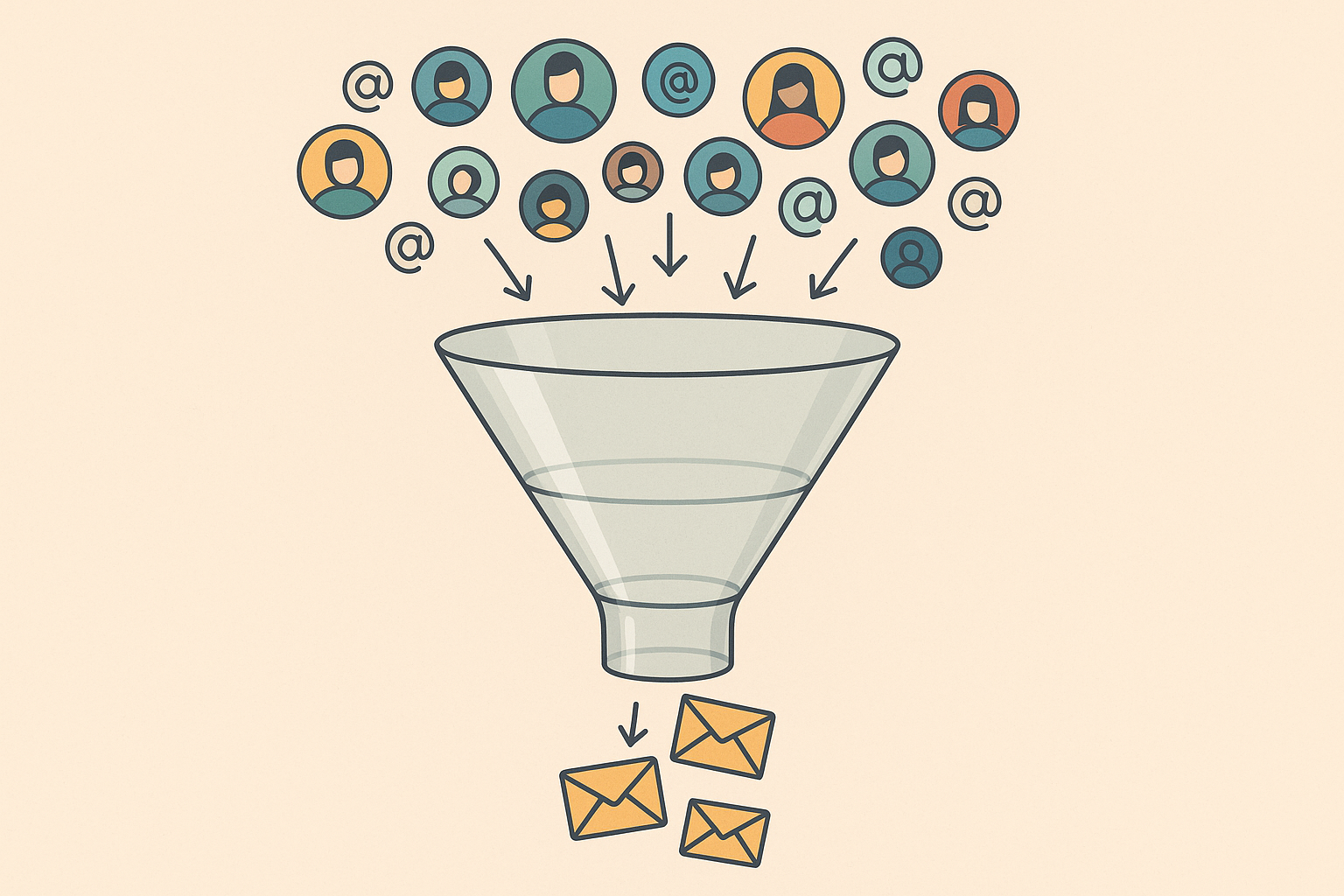
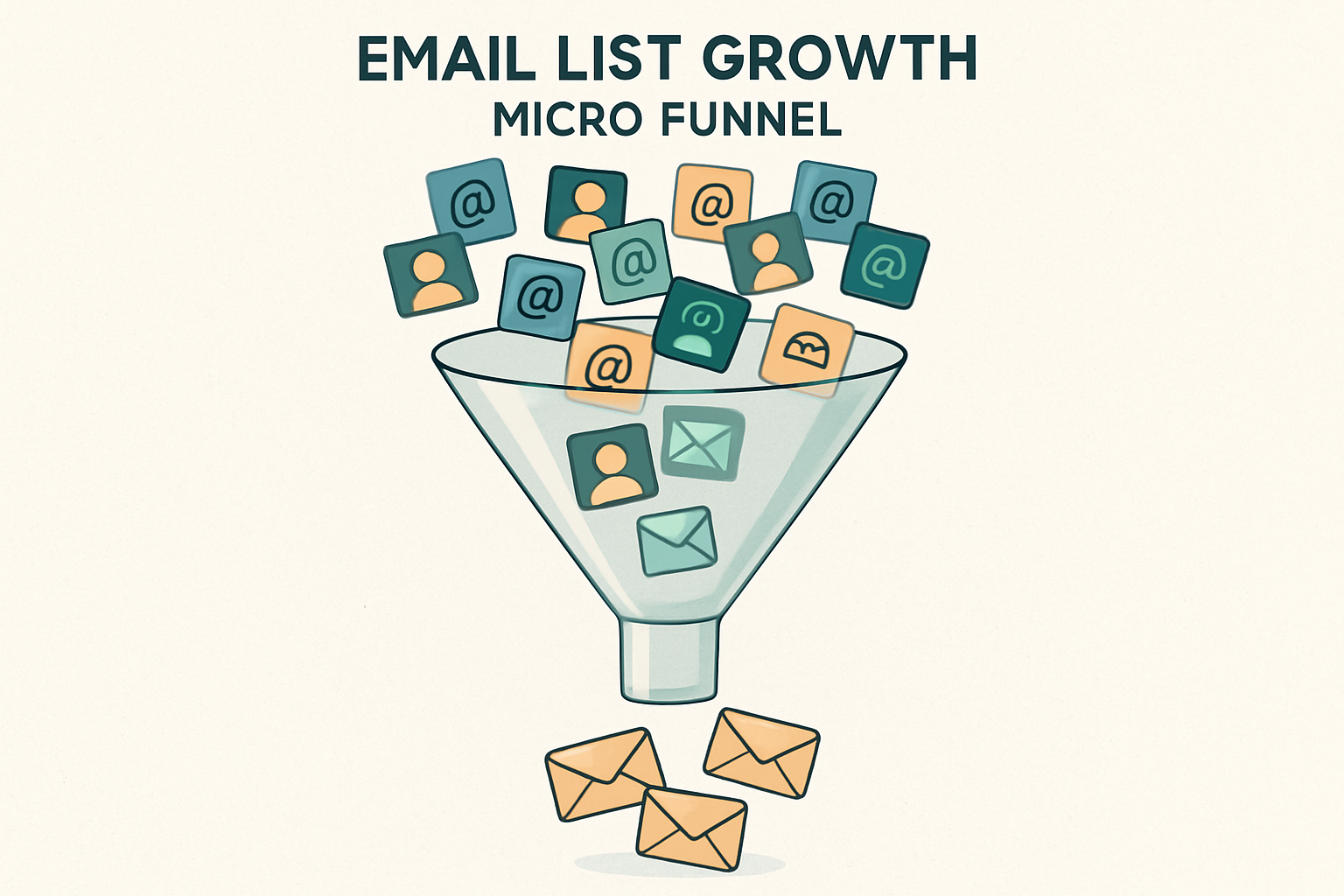
Understanding Micro Funnels for Email List Growth
At 0:40, the video explains micro funnels as small, targeted offers used to build a list fast. The concept is simple, but the execution is where people either become quietly effective or dramatically confused. A micro funnel is usually one niche-specific lead magnet, one landing page, one thank-you page, one simple email sequence, and one clear monetization path.
At 1:20, the creator contrasts this with the usual beginner approach: one oversized lead magnet trying to appeal to everyone. That broad approach often gets buried in competitive search results, weakens messaging, and lowers conversion rates. In our experience, narrower offers often convert better because they answer a very specific need. A broad “fitness guide” may flop; a “7-minute desk workout PDF for remote workers” has a better shot.
As demonstrated in the video at 1:50, the real advantage is reach through variety. You’re creating multiple entry points into the same list or offer ecosystem. That matters for:
- Lead generation: More search terms, more hooks, more audience segments
- SEO strategies: Better alignment with long-tail keyword research
- Sales funnels: Higher intent traffic often means stronger downstream monetization
Here’s a practical setup:
- Choose one monetizable niche.
- Create 10-20 tiny lead magnets around subtopics.
- Build one landing page per lead magnet.
- Tag subscribers inside your CRM by topic interest.
- Send tailored email marketing sequences based on what they downloaded.
This is also where digital marketing becomes less mystical and more organized. You’re not creating chaos. You’re building a portfolio of small funnels that feed one bigger system.
The Power of Niche Selection in Email List Growth
At 3:10, the creator gets to the part many people skip because it is less fun than picking fonts: niche selection. If the niche has weak demand, low buyer intent, or poor affiliate payouts, no amount of aesthetic landing-page confidence will save it.
According to affiliatemarketingmc, you want a niche with passionate buyers and proven offers. Think budgeting, fitness, memory improvement, pet care, gaming, spirituality, or software. In the transcript, examples include memory products, budgeting apps, recurring SaaS offers, legal leads, solar services, and high-ticket courses. Those categories matter because they can support both front-end lead generation and backend monetization.
At 3:50, the video recommends breaking broad topics into smaller subcategories. That’s where keyword research becomes your best friend. “Save money” is broad and competitive. But “50/30/20 budgeting rule” had about 1,000 monthly searches in the creator’s example, while “zero-based budgeting” showed roughly 8,000 monthly searches and a trend line moving up. That’s not random trivia. That’s your content creation roadmap.
Use this niche filter before you build:
- Demand: Are people searching for solutions regularly?
- Buyer intent: Do these people spend money, join webinars, buy online courses, or click affiliate links?
- Offer depth: Can you promote products from ClickBank, Amazon Associates, private programs, or affiliate networks?
- Content depth: Can one topic become 20-100 specific lead magnets?
Examples the video hints at, expanded for 2026:
- Budgeting: debt snowball, sinking funds, no-spend challenge, zero-based budgeting
- Fitness: kettlebell routines, postpartum workouts, mobility drills, walking plans
- Spirituality: angel numbers, moon rituals, manifestation journaling
The creator explains that your best niche is often not the one with the most traffic. It’s the one with enough traffic, enough specificity, and enough money behind it.
Creating Effective Lead Magnets for Email List Growth
This is where the strategy gets delightfully tactical. At 5:30, the video shows how AI can help you brainstorm and produce lead magnets quickly. Years ago, the creator says, this process meant building hundreds of downloads, pages, and variations manually. Now AI can do the heavy lifting, which is frankly the kind of sentence that makes every tired marketer sit up straighter.
A good micro lead magnet should solve one small problem. Not life. Not capitalism. One problem. At 6:10, the creator points toward niche-specific guides and checklists. That’s smart because these formats are fast to create, easy to consume, and easy to pair with affiliate marketing offers.
Examples you could build this week:
- Budgeting niche: “Zero-Based Budgeting Starter Sheet”
- Memory niche: “Daily Brain Exercise Tracker”
- Pet care niche: “Puppy Potty Schedule Printable”
- Online business niche: “Affiliate Blog Post CTA Swipe File”
As demonstrated in the video near 6:50, testing is the difference between having a funnel and having a useful funnel. Create several versions and track:
- Landing page conversion rates
- Email open and click rates
- Affiliate link clicks and earnings per subscriber
Use Google Analytics and your email platform reports together. If a lead magnet gets a 38% opt-in rate but low clicks, your follow-up emails may be mismatched. If another gets a 22% opt-in rate but strong affiliate sales, that’s still valuable. Monetization beats vanity metrics every time.
A step-by-step build process:
- Ask ChatGPT for 25 subtopics in your niche.
- Turn the best 10 into checklists, templates, or mini guides.
- Write one benefit-driven landing page headline per lead magnet.
- Deliver the asset instantly.
- Follow with a 5-email sequence that teaches, segments, and recommends one product.
That’s how email marketing starts to feel less like guesswork and more like product design.
Traffic Generation Strategies That Support Email List Growth
At 7:20, the video recommends organic traffic from search engines and social media. Good. Sensible. Very adult. But the creator also hints at a bigger truth: micro funnels get stronger when your traffic generation strategy is diversified. If one platform changes its rules, your lead generation doesn’t fall apart like a folding chair at a backyard wedding.
Start with these channels:
- SEO and blog traffic: Publish one article per micro topic, optimized around low-competition queries.
- YouTube and video marketing: Create short demos, explainers, or case studies tied to the lead magnet.
- Social media marketing: Use carousels, short clips, and quote posts to tease the free asset.
- Content distribution: Repurpose one asset into email, Pinterest, Medium, LinkedIn, and niche communities.
At 8:00, the video mentions video traffic specifically. That matters because YouTube is a search engine and a trust engine. A short video titled “How Zero-Based Budgeting Works in 10 Minutes” can rank, build authority, and feed a landing page. Pair that with a downloadable worksheet and your conversion path becomes obvious.
For more advanced scaling, add:
- Influencer partnerships with creators who serve the same niche
- Webinars that offer a deeper training and collect higher-intent leads
- Paid advertising on Meta or Google once you know your funnel economics
At 8:40, the creator recommends testing. Yes, even when it’s annoying. A/B testing helps you compare headlines, images, CTA buttons, and traffic sources. According to our research across affiliate campaigns, even a 5% to 10% lift in landing-page conversion can make a huge profit difference once you scale. Don’t just ask what gets clicks. Ask what gets buyers.
Monetizing Your Email List With Affiliate Marketing and Digital Products
At 9:10, the video turns to the point of the whole exercise: monetization. This is not just a hobbyist’s scrapbook of freebies. It’s a system for turning attention into revenue through affiliate marketing, digital products, and related offers. The creator explains that each micro offer can lead people into the same larger offer ecosystem, which is a smart way to simplify your backend.
There are several monetization paths you can use:
- Affiliate products: ClickBank, private affiliate networks, SaaS referrals, and Amazon Associates
- Digital products: ebooks, prompt packs, templates, workshops, printables, and online courses
- Services: coaching, consulting, done-for-you setup, or audits
At 9:50, the video stresses having a clear monetization strategy from the start. That means you pick the product first, then create the lead magnet that naturally leads to that product. A memory exercise printable can lead to a brain health supplement. A budgeting worksheet can lead to a budgeting app, finance course, or CRM-integrated coaching service.
At 10:30, the creator suggests diversifying income streams. That’s especially relevant in 2026, when platform volatility and affiliate program changes can affect revenue overnight. A healthy email business doesn’t rely on one product or one partner.
Try this simple monetization ladder:
- Lead magnet: Free checklist or mini guide
- Tripwire or affiliate recommendation: Low-friction next step
- Core offer: Main affiliate product or your own digital offer
- Upsell: Membership, webinar replay, or premium course
This is where customer relationship management matters too. Tag subscribers by lead magnet, purchase behavior, and engagement level. Better segmentation usually improves conversion rates because you stop sending irrelevant offers to the wrong people. Which, honestly, is just good manners.
Common Pitfalls in Affiliate Marketing and Micro Funnel Email List Growth
The creator’s warning at 11:20 is refreshingly blunt: most people fail because they expect easy money. That’s not cynical. It’s just accurate. Affiliate marketing gets sold online like it’s a beach-adjacent life plan. But the video makes clear that most people never build a meaningful list, never test enough, and never treat this like a business.
At 12:00, the creator warns against relying on a single lead magnet. This is one of the biggest mistakes in lead generation. One offer might underperform for reasons that have nothing to do with your niche: weak copy, poor timing, bad channel fit, or the fact that your audience simply wants something narrower.
Here are the most common micro funnel mistakes:
- No monetization plan: You create a freebie with no logical product path.
- Weak niche selection: You choose a market with low buying intent.
- No testing: You never A/B test headlines, pages, or emails.
- Ignoring analytics: You don’t use Google Analytics, email reports, or click tracking.
- Unrealistic expectations: You expect passive income before doing active work.
According to affiliatemarketingmc, success requires ongoing adjustment. That means studying which lead magnets produce subscribers, which subscribers become customers, and which traffic channels bring quality leads. In our experience, small weekly improvements compound quickly. One extra point in opt-in rate, one stronger subject line, one better CTA. None of it is glamorous. All of it matters.
Case-study style, think about two affiliates:
- Affiliate A promotes one broad ebook and gets a 12% opt-in rate.
- Affiliate B promotes 15 micro offers, averages 24% opt-ins, and segments users by interest.
Who has the stronger business after six months? Exactly.
Emerging Trends in Email Marketing, SEO, and Online Marketing
At 13:10, the video highlights AI as a major force in creating and testing lead magnets. That trend has only deepened. In 2026, AI is helping marketers produce drafts, generate angle lists, create image concepts, personalize email flows, and speed up keyword research. The creator explains that work that once required hundreds of manual pages can now be done much faster, which changes the economics of content creation.
At 13:50, personalization comes up, and for good reason. Generic email blasts are fading. Strong email marketing now means behavior-based segmentation, dynamic content blocks, and follow-ups built around what subscribers actually requested. If someone downloads a budgeting worksheet, send budgeting emails. Not random crypto offers and a webinar about confidence, unless you enjoy unsubscribes.
At 14:30, the video touches on SEO best practices. This is a huge opportunity for affiliate marketers because many competitors still publish shallow content. Better SEO strategies now include:
- Topical clusters built around one monetizable niche
- Search intent matching for each micro offer
- Schema and internal linking that support discovery
- Video embeds and multimedia to improve engagement
Emerging trends worth watching:
- Short-form video marketing tied to downloadable assets
- First-party data strategies as tracking changes continue
- Hybrid funnels combining email, SMS, and CRM retargeting
- Affiliate marketing case studies used as lead magnets themselves
- Micro-community building through private groups and niche newsletters
As demonstrated in the video, the marketers who win won’t be the loudest. They’ll be the ones who can produce useful, targeted assets quickly and improve them consistently.
FAQs About Micro Funnels and Email Marketing
The video’s FAQ-style closing ideas around 16:00 to 18:00 raise the same questions most marketers ask once they understand the basic model. Fair. Because the strategy sounds simple, but people still want to know how to apply it without creating 700 random PDFs and a nervous breakdown.
Here are the practical answers. Micro funnels work best when each lead magnet is tied to one clear pain point, one audience segment, and one product path. AI helps with speed, but not with judgment. You still need to choose a viable niche, understand buyer intent, and review the numbers.
For 2026 best practices, keep these rules in place:
- Use a CRM or email platform with tagging and automation.
- Review analytics weekly. Track opt-in rates, email clicks, unsubscribe rates, and earnings per subscriber.
- Align every freebie with a monetization path.
- Mix SEO, YouTube, social, and partnerships.
- Keep testing. The first version is usually not the winner.
According to affiliatemarketingmc, the point isn’t just to collect emails. It’s to collect the right emails from people who want a specific outcome and are likely to act. That’s what makes micro funnels more than just a clever content trick. It makes them a business system.
Conclusion and Next Steps for Sustainable Email List Growth
Here’s the part you actually need: what to do next. The creator explains throughout the video that email list growth is not about one magical lead magnet. It’s about building many relevant entry points around a niche with real buying intent, then connecting those leads to offers that make sense.
If you want to apply this strategy this week, keep it simple:
- Pick one niche with demand and strong monetization potential.
- Choose one affiliate offer, digital product, or service as your core offer.
- Use ChatGPT to brainstorm 25 narrow topic angles.
- Create your first 5 micro lead magnets.
- Build 5 landing pages and tag subscribers by interest.
- Promote them through SEO, YouTube, and social media marketing.
- Check conversion rates and run A/B tests after the first data comes in.
That is the real lesson from the channel. You don’t need one giant funnel that tries to impress everyone. You need a system that helps the right people say yes, one tiny offer at a time. It’s less flashy. It’s more effective. And honestly, that’s the kind of marketing glow-up that lasts.
Frequently Asked Questions
What are micro funnels and how do they work?
Micro funnels are small, focused lead-generation paths built around one narrow problem or desire. According to affiliatemarketingmc at 16:00, instead of offering one broad freebie like a giant budgeting ebook, you create many tiny offers, such as a 50/30/20 budgeting cheat sheet or a zero-based budgeting checklist, and point them toward the same email system and monetization offer.
How can I effectively use AI for lead generation?
Use AI to speed up brainstorming, drafting, and testing. As demonstrated in the video around 5:30, you can ask ChatGPT for subtopics, lead magnet ideas, landing page headlines, email sequences, and even keyword angles, then refine the outputs so they match your audience and brand voice.
What are some best practices for email marketing in 2026?
The best practices are still surprisingly unglamorous. Focus on personalization, clean segmentation, mobile-friendly layouts, clear CTAs, and ongoing A/B testing. In 2026, email list growth also depends on pairing email marketing with SEO strategies, social media marketing, CRM tagging, and analytics review so you know which lead magnets actually convert.
Can one lead magnet build a profitable affiliate marketing list?
No, and this is one of the creator’s clearest warnings. At 11:20 and again near 12:30, the video explains that most people fail because they expect instant results, skip testing, and treat affiliate marketing like a lottery ticket instead of a system that needs traffic generation, content creation, and steady optimization.
How do you choose the right niche for micro funnels?
Start with a proven offer and then work backward. The creator explains around 3:10 that a good niche has passionate buyers, repeat demand, and multiple subtopics you can break into separate offers, such as workout types, budgeting methods, memory exercises, pet care categories, or astrology number guides.
Key Takeaways
- Build multiple small, specific lead magnets instead of relying on one broad freebie; this improves targeting and supports faster email list growth.
- Start with a proven monetization path, then create micro funnels that connect directly to affiliate products, digital offers, or services.
- Use AI tools to brainstorm subtopics, draft assets, and speed up landing page creation, but still validate ideas with keyword research and testing.
- Diversify traffic generation across SEO, YouTube, social media, content distribution, webinars, and partnerships so one platform change doesn’t derail lead generation.
- Track conversion rates, segment subscribers in your CRM, and keep A/B testing because micro funnel success comes from ongoing optimization, not one-time setup.